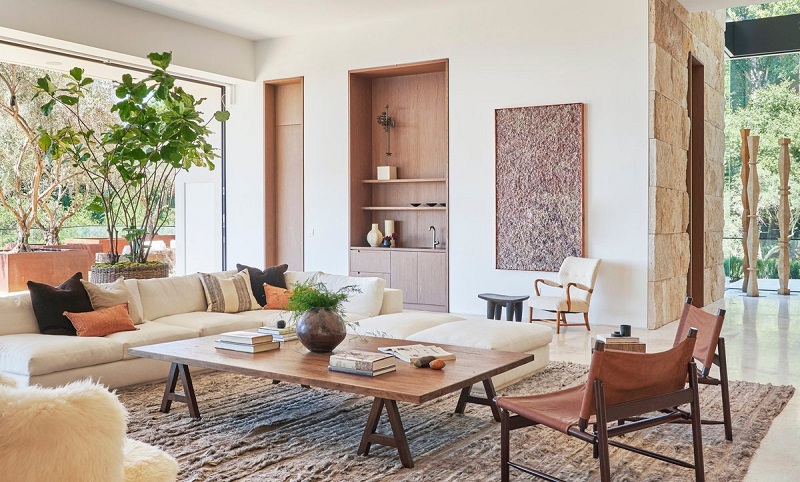
As people become more aware of their impact on the environment, sustainable interior design is a growing trend in the design world. Sustainable interior design is an essential aspect of modern architecture and design, focusing on creating spaces that are environmentally friendly, energy-efficient, and promote overall well-being. This concept aims to minimize the environmental impact of buildings while providing a comfortable and aesthetically pleasing space for occupants. In this article, we will discuss various strategies and techniques to achieve sustainability in interior design, using the keyword “sustainable interior design.”
Sustainable Interior Design: Key Principles
The following key principles are crucial for sustainable interior design:
1/Resource Efficiency
Sustainable interior design aims to maximize resource efficiency by utilizing materials, energy, and water efficiently. This involves selecting materials with low environmental impact, using energy-efficient appliances and lighting, and promoting water conservation.
2/Durability and Longevity
A significant aspect of sustainable interior design is creating spaces that are long-lasting and durable. This principle involves selecting materials, finishes, and furniture that can withstand daily wear and tear, ensuring that the space remains functional and aesthetically pleasing for an extended period.
3/Health and Well-being
Sustainable interior design prioritizes the health and well-being of occupants. This involves using non-toxic materials, promoting natural light and ventilation, and incorporating biophilic design elements, such as indoor plants and greenery.
4/Adaptability and Flexibility
Sustainable interior design focuses on creating spaces that can adapt to changing needs and requirements. This principle involves designing spaces that can be reconfigured or repurposed easily, ensuring that the space remains functional and relevant over time.
Strategies to Achieve Sustainability in Interior Design
To implement sustainable interior design, consider the following strategies:
1/Sustainable Materials
Choose environmentally friendly materials for the interior design project. Opt for materials that have a low environmental impact, such as reclaimed or recycled materials, locally sourced materials, and materials with low VOC (volatile organic compounds) content. Additionally, consider the life-cycle assessment (LCA) of materials to determine their overall environmental impact, from extraction and processing to disposal.
2/Energy Efficiency
Incorporate energy-efficient appliances, lighting, and systems into the design. This includes using LED lights, Energy Star-rated appliances, and advanced HVAC systems that optimize energy consumption. Additionally, consider incorporating renewable energy sources, such as solar panels, to further reduce the building’s carbon footprint.
3/Water Conservation
Promote water conservation through the use of water-efficient fixtures, such as low-flow faucets, dual-flush toilets, and water-saving showerheads. Additionally, consider incorporating a greywater recycling system to reuse water from sinks, showers, and washing machines for irrigation or toilet flushing.
4/Natural Light and Ventilation
Maximize the use of natural light and ventilation to reduce energy consumption and improve indoor air quality. This can be achieved through the strategic placement of windows, skylights, and doors, as well as the use of light-reflecting surfaces and light shelves. Furthermore, consider incorporating passive cooling and heating techniques, such as thermal mass and natural ventilation, to minimize the reliance on mechanical systems.
5/Biophilic Design
Incorporate biophilic design elements to improve occupants’ well-being and create a connection with nature. This includes adding indoor plants and greenery, using natural materials and textures, and incorporating views of nature or outdoor spaces.
6/Waste Reduction
Aim to minimize waste during the design process and throughout the lifecycle of the space. This involves selecting materials with minimal packaging, implementing a recycling program, and using modular or demountable components that can be easily disassembled and reused or recycled at the end of their life.
7/Adaptive Reuse
Consider adaptive reuse strategies when working with existing buildings or spaces. This involves repurposing and retrofitting existing structures to serve new functions, preserving the building’s historical and cultural significance while minimizing the environmental impact associated with new construction.
8/Flexible and Adaptable Spaces
Design spaces that can be easily reconfigured or repurposed to meet changing needs and requirements. This can be achieved through the use of movable walls or partitions, modular furniture, and multi-functional spaces that can serve various purposes.
In conclusion, sustainable interior design plays a crucial role in creating environmentally friendly, energy-efficient, and healthy spaces for occupants. By incorporating the key principles and strategies mentioned above, designers can successfully achieve sustainability in their interior design projects, contributing to a greener and more sustainable future for all.